Exotic Edibles
Safe Plants

October 2005
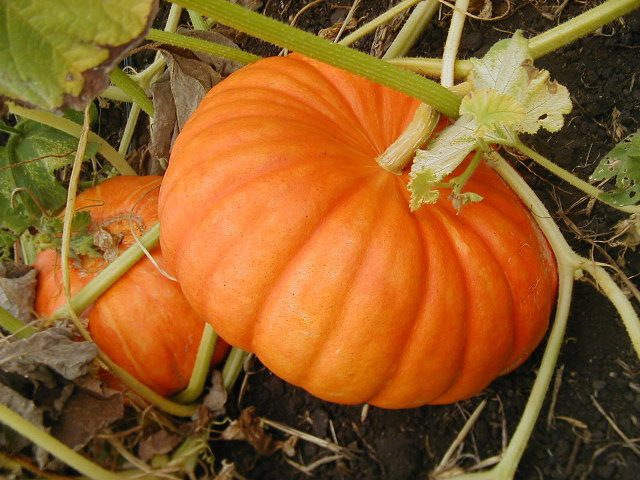
Rouge d’Etampes Pumpkin – “Cucurbita pepo” Origin: France We just got done this morning pulling the last of these pumpkins out of our garden…this year was a bumper crop! Also

Exotic Edibles
NOVEMBER
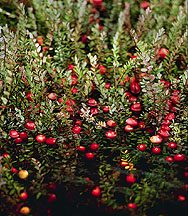
Highbush Cranberry – Viburnum trilobum
Origin: North America
Since we are coming into the holiday season, I thought I would pick a plant that would capture the spirit of giving. The Highbush Cranberry is an easily grown native shrub which offers the double bonus of edible fruit and year round beautiful foliage. They can be found growing from British Columbia to Newfoundland to the northernmost states of the USA. Although it’s commonly known as a “cranberry”, it is more closely related to a honeysuckle than the cranberries served with Thanksgiving turkey.
As a native species, the Highbush Cranberry has adapted well to the local insect and disease pests. It’s cultivation requirements are simple with a tolerance of a variety of soil types. It prefers soil which is moist but well-drained and does best in slightly acidic soil (pH 6.0-6.5). A annual application of compost or well rotted manure produces the best results for fruit and flowering. Although the Highbush Cranberry will grow in partial shade, it prefers full sun.
Maintenance is easy. Any pruning should consist of removal of the oldest stems to encourage new shoot growth. The Highbush Cranberry looks best when kept in its natural form. Mulching is also in order, since the roots lie near the surface and weeding would prove detrimental.
In early summer, the Highbush Cranberry produces masses of white flowers. The flower clusters are an interesting feature of this shrub because each cluster is composed of two distinct types of blooms. The showier blossoms on the outside of each cluster are sterile, while the less conspicuous flowers in the center are fertile. Pollinating insects are lured in by the showy sterile blooms to visit the plainer flowers of the cluster. Lustrous red fruit begins to set in mid summer, forming an attractive contrast to the green leaves. These red fruit clusters remain on the plant throughout the winter, not only brightening the landscape but feeding a wide variety of wildlife.
So why not bring a little holiday cheer to the deer, moose, fox, raccoons, chipmunks, squirrels, skunks, mice, rabbits, grouse, pheasants, robins, cedar waxwings and other songbirds by planting a Highbush Cranberry or two?
Rouge d’Etampes Pumpkin – “Cucurbita pepo” Origin: France We just got done this morning pulling the last of these pumpkins out of our garden…this year was a bumper crop! Also
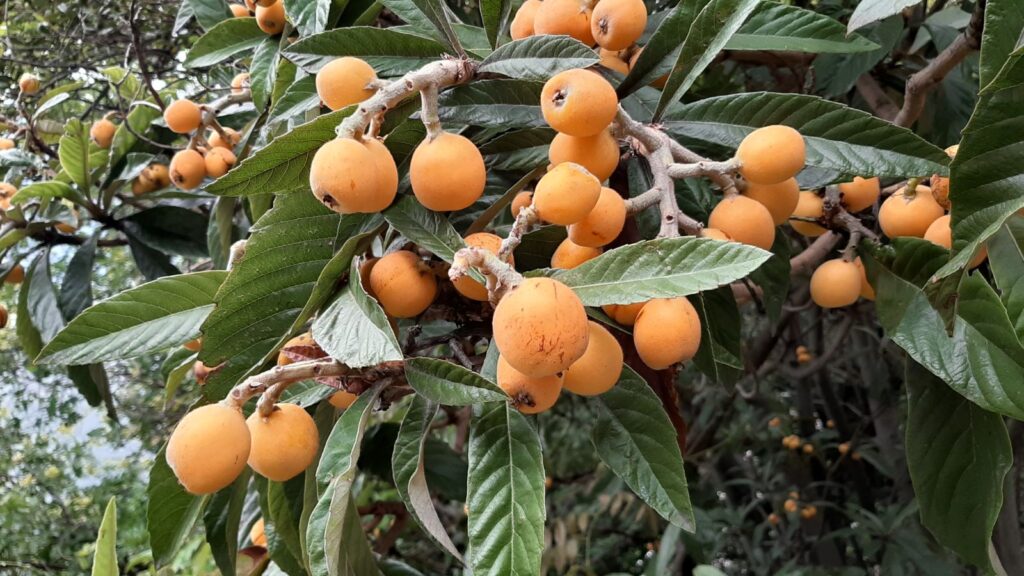
Loquat – Eriobotrya japonica Origin: China Last month I gave a plant talk at the Erie Cage Bird Association. Afterwards, the club held a raffle of plants which I had

Thai Hot Peppers aka “Thai Dragons” – Capsicum frutescens Origin: Asia Hot peppers have gained in popularity over the past few years, due in part to the fact that even