Exotic Edibles
Safe Plants

October 2005
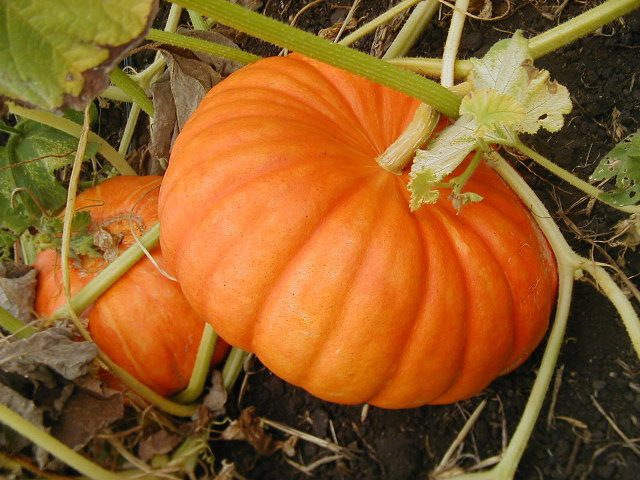
Rouge d’Etampes Pumpkin – “Cucurbita pepo” Origin: France We just got done this morning pulling the last of these pumpkins out of our garden…this year was a bumper crop! Also

Exotic Edibles
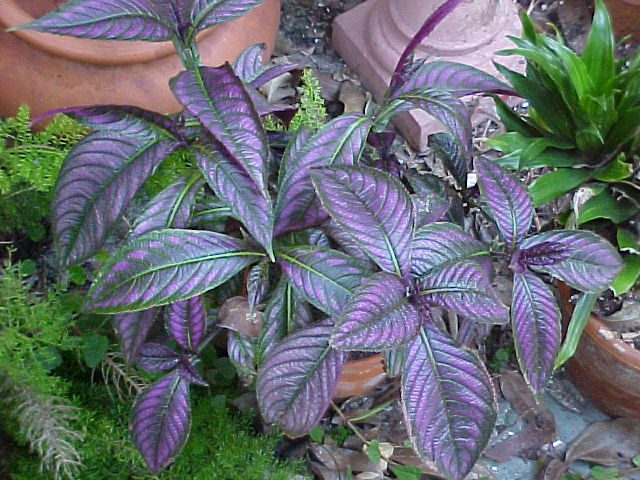
Persian Shield – Strobialanthus dyerianus
Origin – Burma
Simply put, this perennial plant is pure eye candy. Its long leaves are iridescent shades of purple, lilac and pink. As if those colors aren’t awesome enough, the Persian Shield looks like it has a light coat of silver electroplated to it. And to the best of my knowledge, it’s one and only contribution is beauty. Outside, it is a plant that the wildlife leave alone. Indoors, it hasn’t attracted any unwanted attention as well. Persian Shield doesn’t contain any known toxic chemicals so I’m taking an educated guess that it’s striking coloration discourages sampling. (Attention kitty owners.!)
Persian Shield is an old fashioned plant that was used in Victorian gardens and then disappeared for some years. It prefers well-drained, organic soil. Locate it where morning sun and afternoon shade occurs to keep its brilliant colors from developing a scorched look. Keep the plants uniformly moist throughout the growing season (summer) and water as needed the rest of the
year. Persian Shield does not like cold conditions so in zones 9 and lower, as the temperatures drop, you should move it indoors where it will do well if misted regularly.
This plant has another virtue. It is very easy to propagate by cuttings. Rather than move the plant indoors, you can take cuttings in the fall and over winter them in the windowsill. The cuttings do better being rooted in a seed-starting mix rather than water. Also, using a root hormone on the cuttings makes a big contribution to successful propagation.
If you are looking for a fast-growing foliage plant that can grow up to five feet, has few insect and disease problems, looks great outdoors during warm weather and works fine as a house plant in the winter months without being consumed by the local fauna, Persian Shield is a good choice.
Rouge d’Etampes Pumpkin – “Cucurbita pepo” Origin: France We just got done this morning pulling the last of these pumpkins out of our garden…this year was a bumper crop! Also
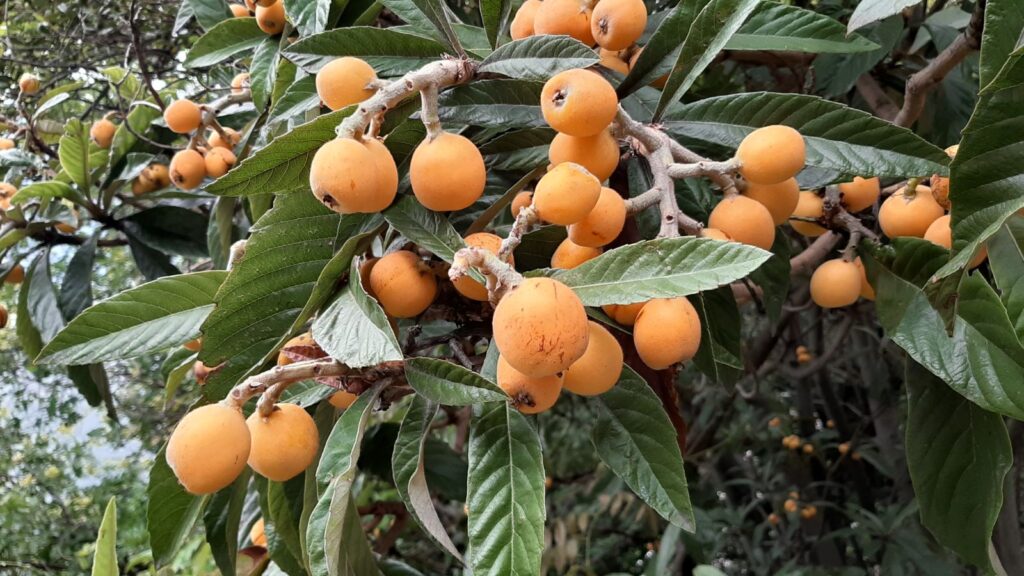
Loquat – Eriobotrya japonica Origin: China Last month I gave a plant talk at the Erie Cage Bird Association. Afterwards, the club held a raffle of plants which I had

Thai Hot Peppers aka “Thai Dragons” – Capsicum frutescens Origin: Asia Hot peppers have gained in popularity over the past few years, due in part to the fact that even