Exotic Edibles
Safe Plants

October 2005
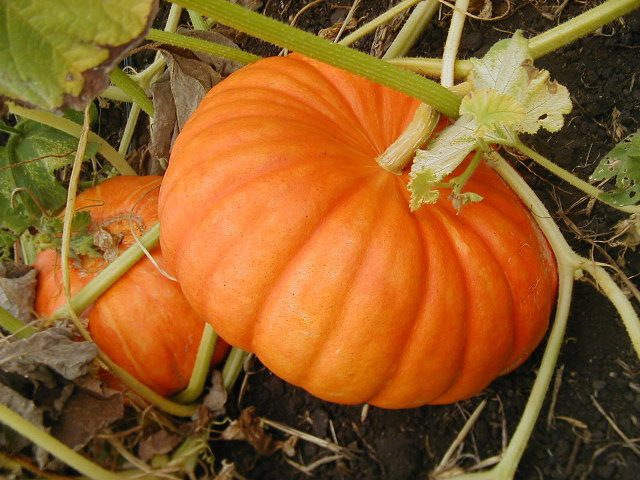
Rouge d’Etampes Pumpkin – “Cucurbita pepo” Origin: France We just got done this morning pulling the last of these pumpkins out of our garden…this year was a bumper crop! Also

Exotic Edibles
SEPTEMBER
Purira Chile Pepper
Capsicum frutescens
Origin: South America
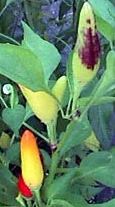
You’ve heard folks boast about how hot the Habanero is…well, this pepper has a burn that’s equal to or more. The Purira bears an abundant supply of sizzling hot fruits that grow upright and are pointed. The fruits start yellow with purple blotches and then begin to change colors as they get hotter and hotter. When fully ripe, at a fiery orange-red color, they are so intense that they could not be measured on the Scoville scale that measures a pepper’s heat!
So why would I list such a pepper? Because it works well for parrots and other fruit-eating birds. You see birds don’t have moist membranes in their mouths so no matter how hot the pepper, it won’t bother them.
The size of the Purira (approximately 2 inches in length) and it’s flashy colors will catch the eye of the bigger parrots. My African Grey and Green Winged Macaw munch these peppers down with no problem.
And since fresh hot peppers are loaded with vitamins A and C, I encourage them to eat as many as they want.
The Purira is fairly easy to grow because it is disease resistant and matures in about 70 days. I give my plants full sun, water as needed, and bring them inside when the temperatures begin to get into the low 40’s F.
Rouge d’Etampes Pumpkin – “Cucurbita pepo” Origin: France We just got done this morning pulling the last of these pumpkins out of our garden…this year was a bumper crop! Also
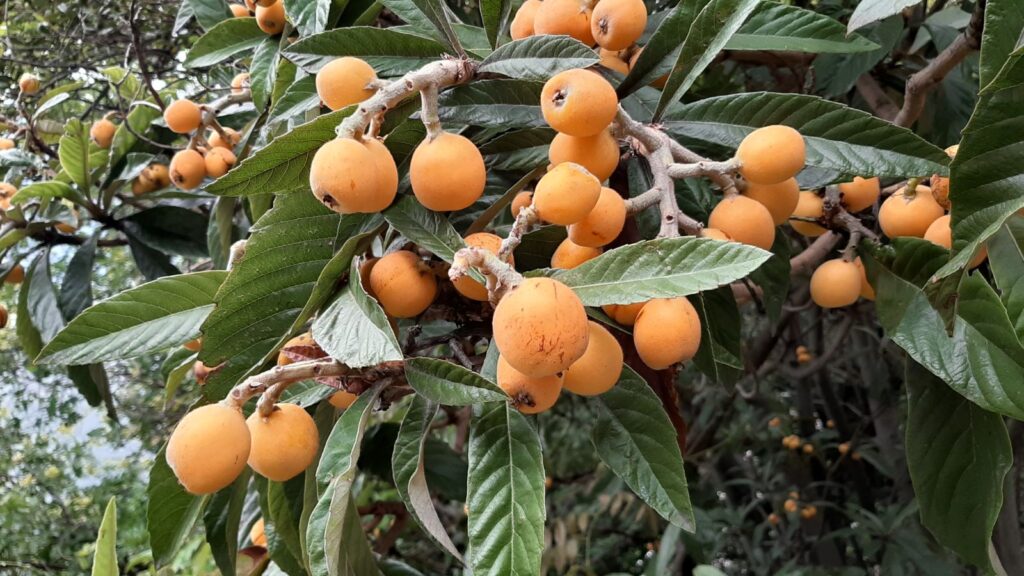
Loquat – Eriobotrya japonica Origin: China Last month I gave a plant talk at the Erie Cage Bird Association. Afterwards, the club held a raffle of plants which I had

Thai Hot Peppers aka “Thai Dragons” – Capsicum frutescens Origin: Asia Hot peppers have gained in popularity over the past few years, due in part to the fact that even